
Book Summaries8 min read
Book Summary: A Scrum Book by Jeff Sutherland | The Big Ideas and Actions
A book summary highlighting 3 big ideas, 2 compelling quotes and 1 action you can take from A Scrum Book by Jeff Sutherland
Articles
9 articles
A book summary highlighting 3 big ideas, 2 compelling quotes and 1 action you can take from A Scrum Book by Jeff Sutherland

The Coronavirus has been a great demonstration of how difficult drive behaviour change. Yesterday the UK Government mandated stricter policies to restrict movement after many people across the country continued to socially mingle.In order for behaviour to happen the following needs to occur:Behaviour happens when motivation & ability & prompt converge at the same moment (B=MAP)
BJ Fogg – Tiny HabitsTo date the government has relied on the motivation to “protect the NHS” for behaviour change.We s
The Shipping Forecast is a BBC Radio broadcast of weather reports and forecasts for the seas around the coasts of the British Isles. In October 1859, the steam clipper Royal Charter was wrecked in a strong storm off Anglesey; 450 people lost their lives. Due to this loss, Vice-Admiral Robert FitzRoy introduced a warning service for shipping in February 1861, using telegraph communications.Wouldn’t it be great to have a similar shipping forecast for agile coaches? A way to assess the conditions w

Why do people struggle adopting the agile mindset? This article explores how your mindset might be the problem. Exploring human biases, the article examines how a different way of thinking may lead to new results.
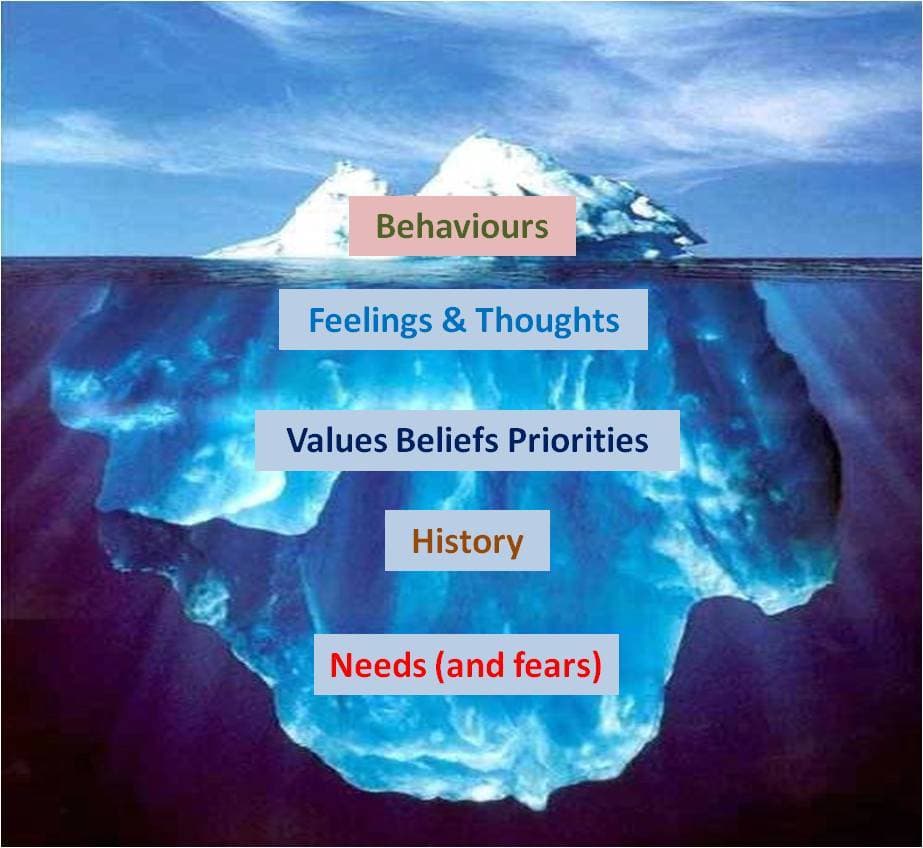
Do your retrospectives look like this?Team members walk into the room reluctantly. The Scrum Master throws out the Post-It notes onto the table and asks the team to write down some thoughts. You only have 3 minutes. You stick the Post-It’s on the wall and you dot vote. The top topics get discussed and you leave with some actions, which you never complete. This is a simplification but i’ve found it is often a representation of reality. Most retrospectives fail to achieve any serious and lasting c
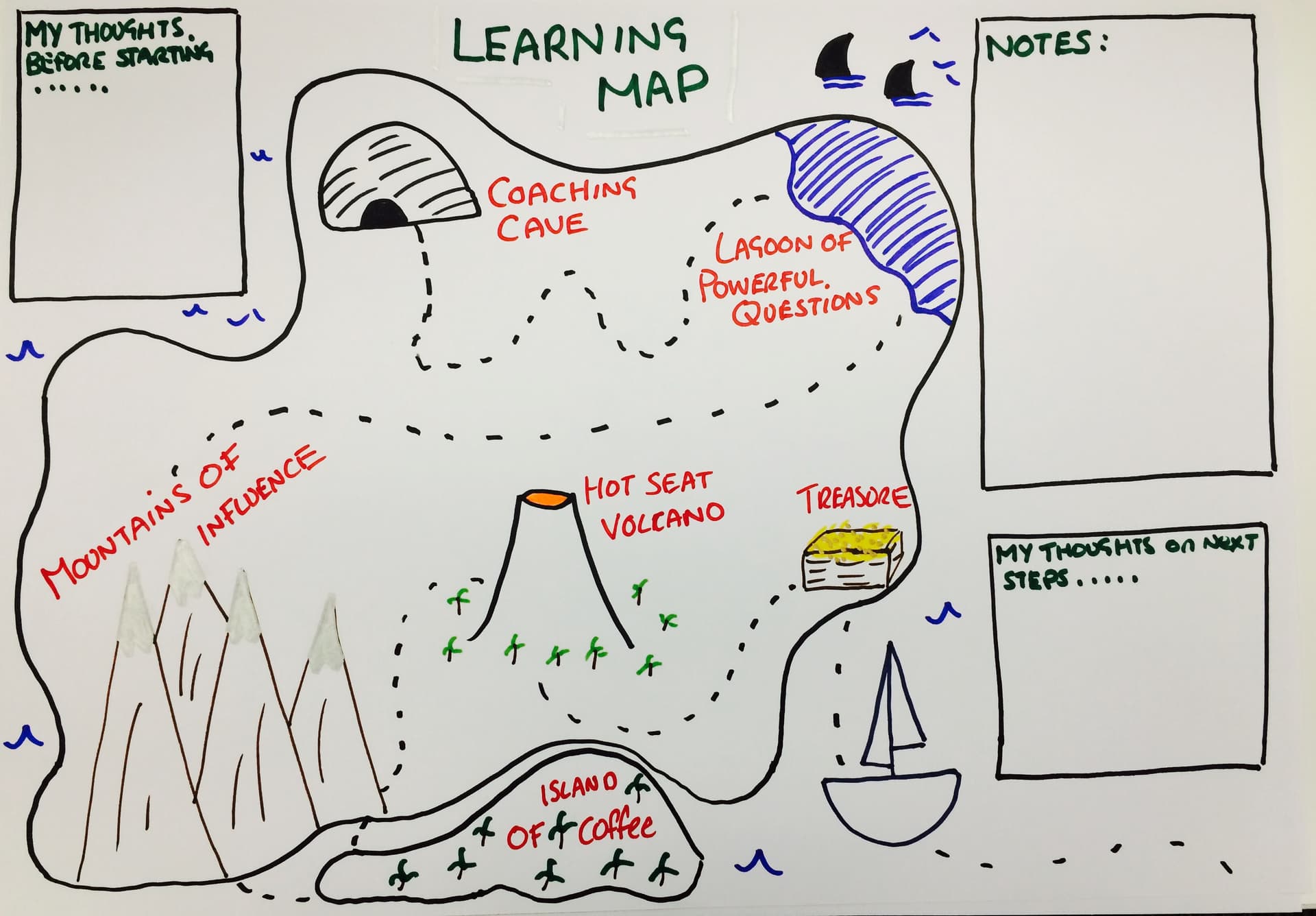
I’m sure we have all been to many workshops and the first thing a facilitator presents is the agenda for the day. If you are lucky this might be on a flip chart or even worse its powerpoint slide 1 of 100. Your initial thoughts, this is going to be a long day.Introducing Learning MapsLearning Maps are an interactive and metaphorical way to present your agenda. People learn best through experience so a learning map creates an instant connection to the workshop topics.Here is a Learning Map I used

This weekend I took a trip to Tate Modern, London. One of the exhibitions that caught my eye was Cildo Meireles ‘Babel’ (2001)Babel 2001 is a large-scale sculptural installation that takes the form of a circular tower made from hundreds of second-hand analogue radios that the artist has stacked in layers. The radios are tuned to a multitude of different stations and are adjusted to the minimum volume at which they are audible. Nevertheless, they compete with each other and create a cacophony of
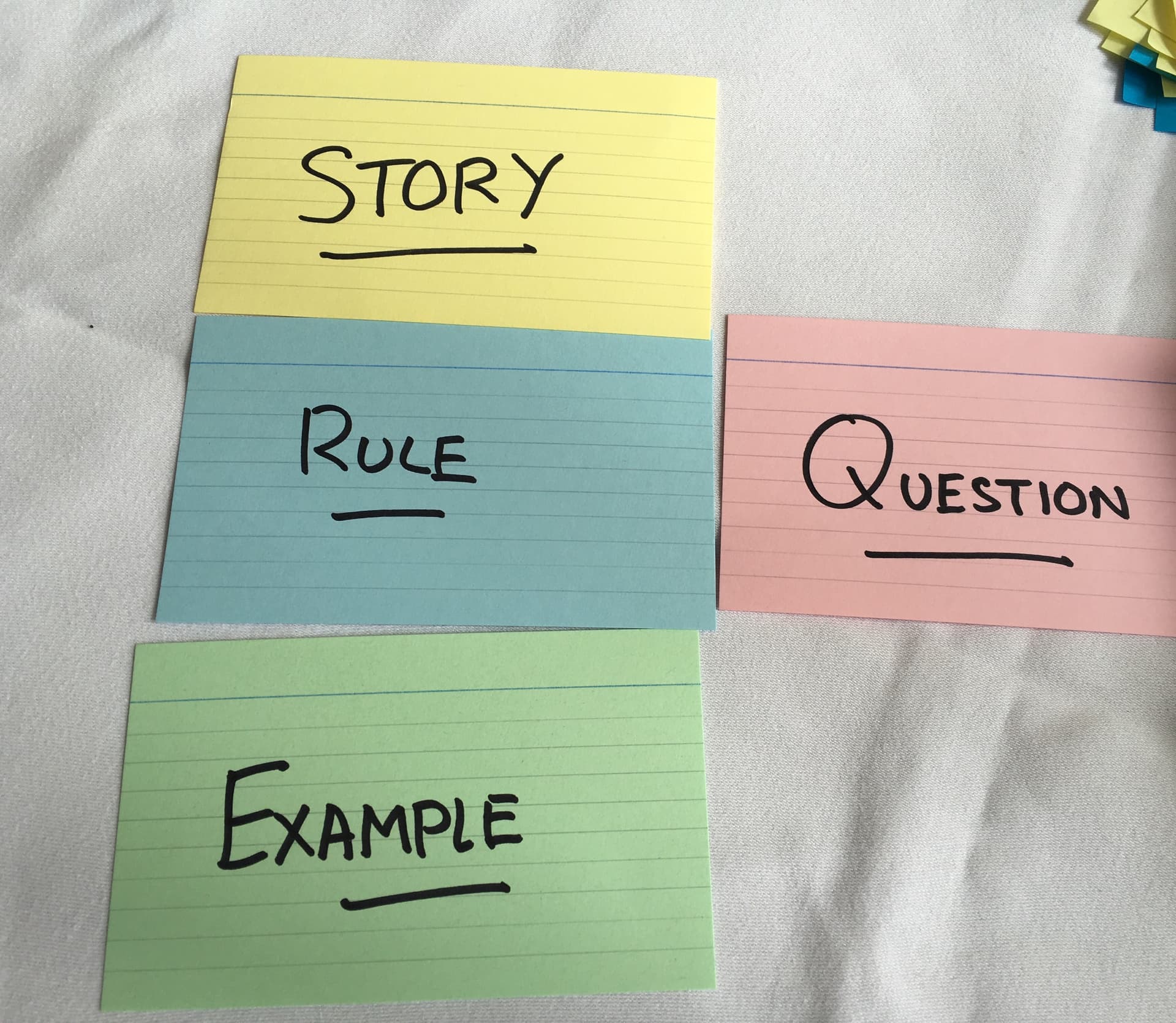
A few months ago i came across Matt Wynne’s post about Example Mapping on the cucumber blog. During XP2016 I attended Matt’s Example Mapping workshop. I’ve been using the technique with teams for a few months now. This post will share what Example Mapping is and some of the experiences i’ve had using it.What is Example Mapping?Here is the process taken from the Cucumber blog:Example Mapping uses a pack of 4-coloured index cards and some pens to capture these different types of information as the

Successful conversations are central to agile teams. As it states in the Agile manifesto:“Individuals and interactions over processes and tools”With this emphasis it is no surprise that many of the agile approaches adopted by teams today focus on enabling successful conversations:User Stories – “3 C’s – Card, Conversation, Confirmation.” Ron JeffriesBehaviour Driven Development(BDD) – “The single most important part of BDD is the conversation.” Liz KeoghThree Amigos – “Conversations between the